
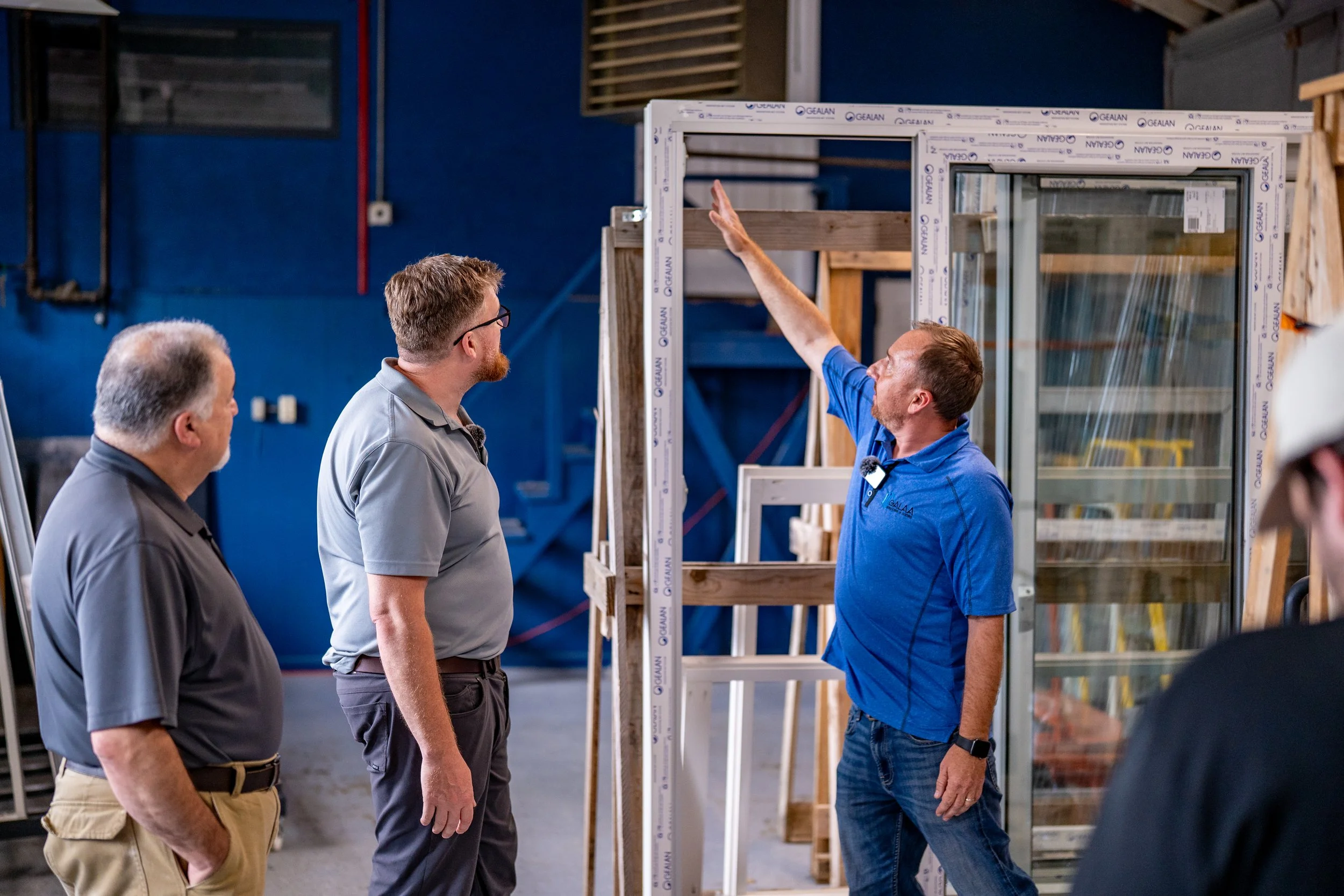
If you drove through Fairfield County five years ago and looked at the windows going into new custom homes, you would have seen double-hung units on almost every job. That is not what you see today.
Tilt-turn windows are showing up on architect specs across Connecticut. Builders who never considered European-style windows before are now getting them written into project plans by the architect.
So what happened? A few things, actually. And they all pushed in the same direction.
Connecticut's energy codes are getting stricter
Connecticut is in the process of moving to its 2026 State Building Code, with the next code package expected to take effect in mid-2026. The state has indicated it anticipates adopting the 2024 IECC and related model codes, which continue the broader push toward tighter envelopes, better window performance, and stronger overall energy efficiency on new construction projects.
That is where architects keep hitting a wall. Literally. You spend good money on an R-30 wall assembly. Spray foam, taped seams, continuous air barrier. Then a standard double-hung window goes into that wall and the numbers tank. A typical double-pane double-hung barely gets to R-3. One weak component pulls down the whole building envelope.
On Passive House and Net-Zero Energy projects, architects figured this out a long time ago. Those specs require airtightness and insulation numbers that regular American windows can't hit. But now the everyday Connecticut energy code is heading in that same direction. Architects who never worked on a Passive House are looking at the same math and reaching the same conclusion. The standard double-hung doesn't cut it anymore.
How GALAA windows clear Connecticut energy codes by a wide margin
GALAA was built around this exact problem. Our glass packages reach U-factors as low as 0.15. The code asks for 0.30. That is not just passing. That is passing with room to spare on inspection day.
Both the ProLine and CoreLine systems come with double or triple gasket sealing as options. That sealing is what helps builders hit the blower door number without extra treatments or rework around the frames. When air can't sneak past the window, the whole house tests tighter.
Every GALAA window carries NFRC certification that covers Connecticut, Massachusetts, Vermont, and the rest of the cold-climate Northeast. For an architect writing a spec, that certification takes one more worry off the table.
Not every project needs triple-pane glass to pass code either. GALAA's advanced framing and sealing systems often push our double-pane units past the code threshold on their own. But when a project calls for more, like a Net-Zero build or a site with brutal winter exposure, triple-pane is there.
The thermal numbers actually make sense now
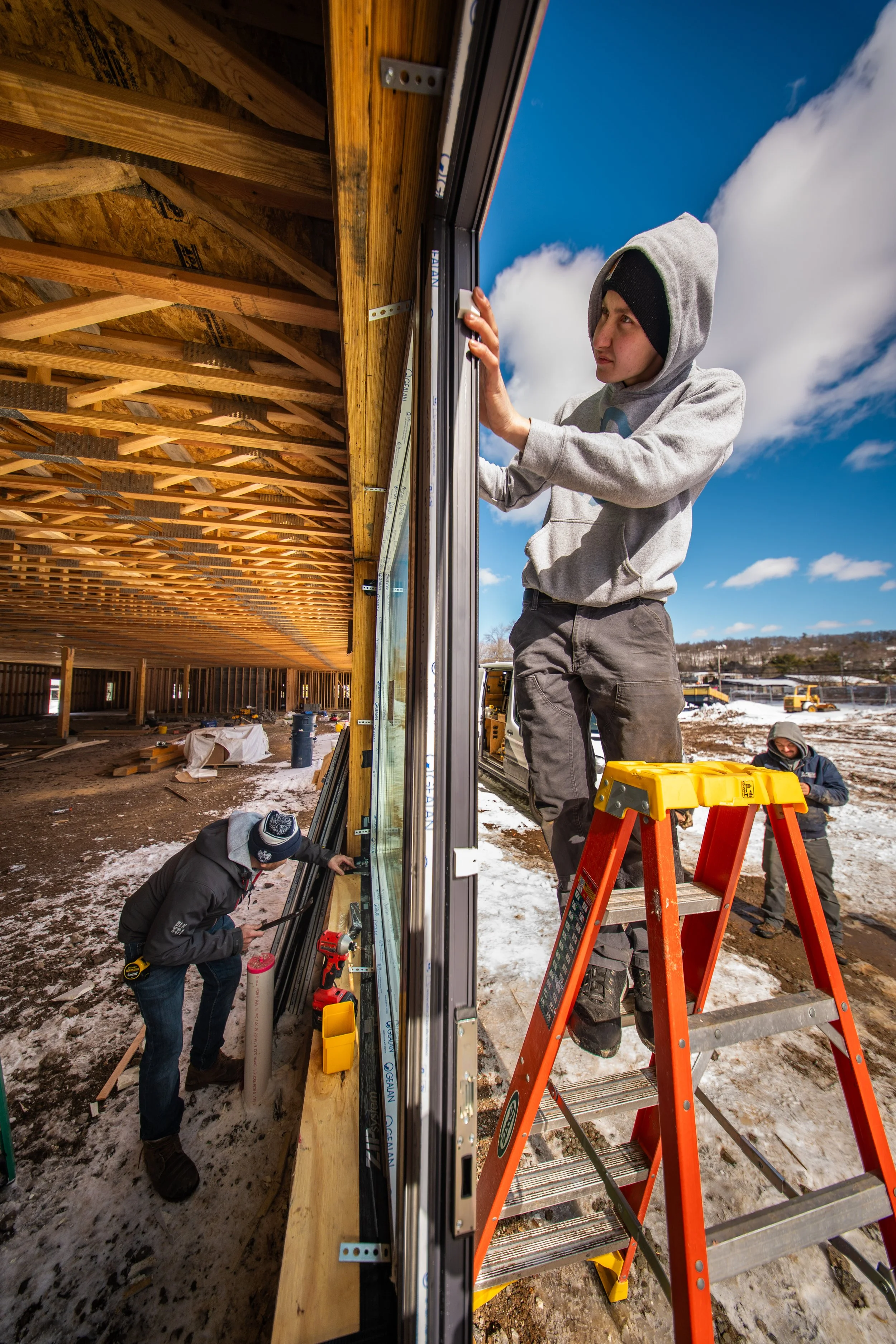
Nobody building a new home in Connecticut is doing it on the cheap. Between land, labor, and materials, there is too much money in the project to put in windows that don't match the rest of the build.
GALAA Windows uses triple-pane glass from Cardinal and multi-chamber profiles from Gealan. That combination gets you U-factors well under what a standard American double-hung can manage. In plain terms, less heat leaves your house in January and less heat gets in during July.
Think of it this way. Your builder just spent real money on an insulated wall system. If the window in that wall performs at a fraction of the wall's R-value, you have a weak spot. Upgrade the window to European-style triple-glazed, and that weak spot goes away.
Because GALAA manufactures right here in Connecticut, architects don't have to wait months for an overseas shipment. They spec a custom size, and the factory in Plainville builds it.
Double-hung windows leak air and everybody knows it
Air leakage wrecks a new home's performance. Doesn't matter how much insulation you packed into the walls if the windows let conditioned air slip out.
Double-hung windows have a sliding sash. Springs or balances hold it in place. That design is over a hundred years old and it has never sealed well. The sash-to-frame connection is loose from day one, and it gets worse as the house settles and temperatures cycle.
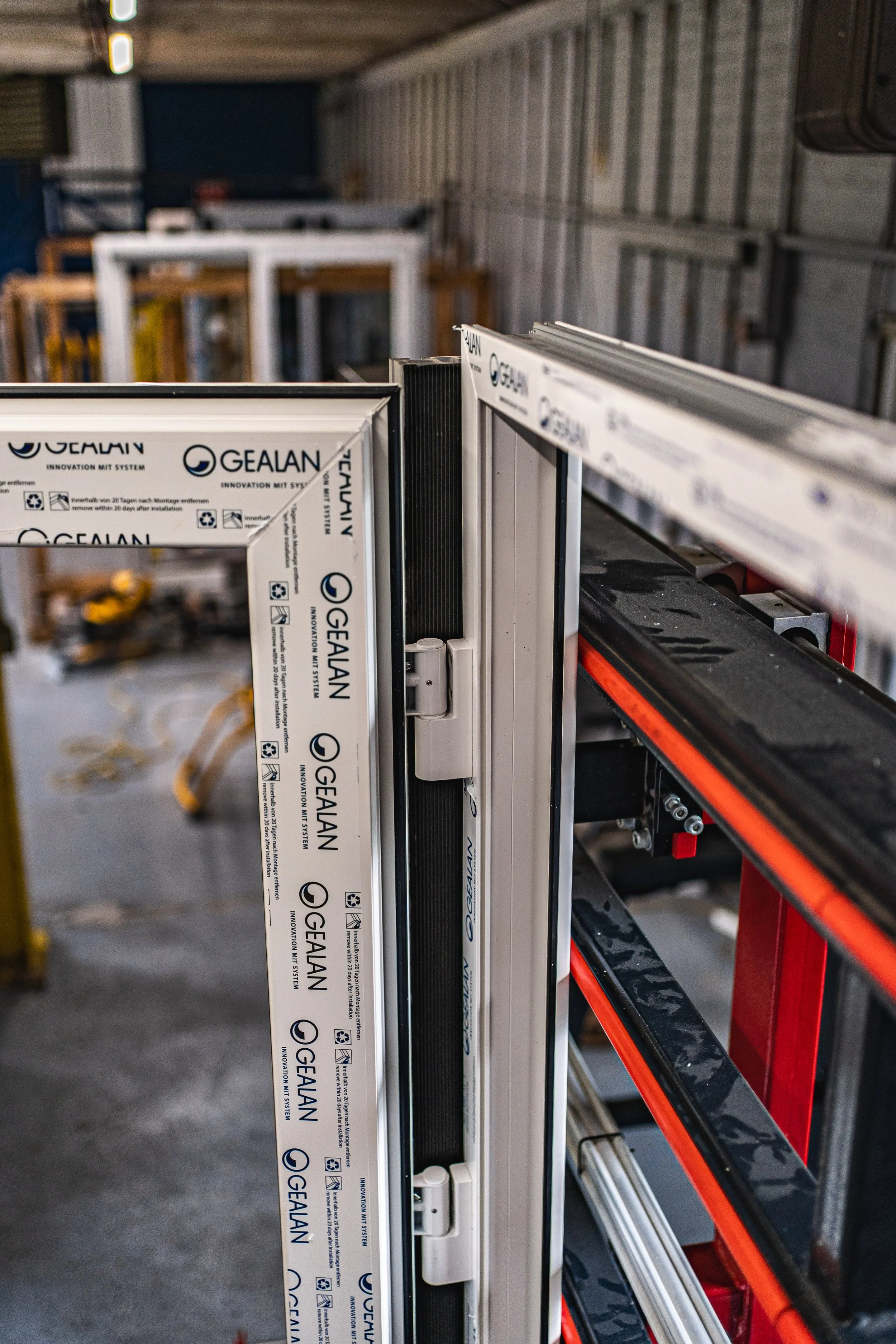
Tilt-turn windows use compression seals instead. The sash presses into the frame and locks down at multiple points. GALAA uses Winkhaus hardware that engages at several spots around the perimeter of the window, not just one or two. Years later, that seal is still holding.
Architects care about this because blower door performance has become a major part of high-efficiency new construction, and tighter window systems can make those targets easier to hit. If the windows leak, the house won't hit its air changes per hour number. The architect takes the blame. So they spec a window they can trust, and tilt-turn has earned that trust.
Nobody talks about noise until they move in
Sound performance is the sleeper issue in new construction. Most homeowners don't bring it up during design. Then they move in near I-95, or Route 8, or under the flight path to Bradley International Airport, and suddenly noise is all they talk about.
Triple-pane glass with airtight seals carries a higher STC rating than a double-pane double-hung. The glass is heavier, the air space between the panes is wider, and the frame seals tighter. All of that blocks more outside sound.
Architects doing projects in Stamford, New Haven, Greenwich, and other towns with highway or airport noise have started specifying European-style windows just for the sound control. The energy savings come along for the ride, but sound is what sold the client.
They work with Connecticut's building styles, not against them
Architects sometimes wonder if a European-style window will look right on a Colonial or a Cape Cod. Fair question. Connecticut has strong traditional architecture and homeowners care about curb appeal.
But tilt-turn windows are not one-look-fits-all. They come in different frame widths, colors, and finishes. Want a slim, modern profile for a contemporary build? That works. Need a wider frame with a wood-grain laminate for a farmhouse project? That works too.GALAA's CoreLine and ProLine windows give architects a clean sight line. More glass, less frame. Most designers want that no matter what style they are drawing. And with custom color matching available, the window blends into the design rather than fighting it. For projects that call for a more traditional look, muntin kits are also available to create classic divided-light patterns without sacrificing performance
Security is already built in
Most double-hung windows lock at one point. One latch. That's it.
Tilt-turn windows from GALAA lock at multiple points around the frame using Winkhaus multi-point hardware. The sash pulls tight against reinforced frame sections at every lock point. Add impact-resistant glass and you have a window that is seriously difficult to force open.
Architects like this because they don't have to spec aftermarket security hardware. It is already part of the window. One product, one spec line, done.
The factory is right here in Connecticut
This used to be the deal breaker. An architect would want to spec European windows but the lead time killed the project schedule. Twelve weeks from Germany. Sixteen from Poland. Plus shipping, customs, and the chance of damage in transit.
GALAA builds in Plainville. That is a short drive from most job sites in Connecticut. Lead times shrink. Communication is face-to-face when it needs to be. If a unit needs adjustment, you're not waiting on an international shipment.
What this means if you are building a new home
Talk to your architect about European-style tilt-turn windows. Even if it wasn't part of the original plan, it is worth a conversation.
Windows touch everything in a house. How warm it stays in winter. How cool it stays in summer. How quiet it is inside. How secure the openings are. How much light comes through. Getting the windows right during new construction costs less and works better than swapping them out later.
Connecticut architects are writing these windows into more specs every year because the products solve real, measurable problems. Lower U-factors, tighter air seals, better sound ratings, stronger locks, and clean lines that work with any style home.
And with GALAA building them locally, the old excuses about lead times and logistics don't hold up anymore.
Ready to talk about your project?
GALAA Windows builds high-performance European-style windows and doors in Connecticut. We work with architects, builders, and homeowners on new construction and replacement projects across the state.
Call +1 860 515 7203 or go to galaawindows.com to set up a consultation.
