
Connecticut Is in Climate Zone 5A: What That Actually Means for Your Replacement Windows
Two houses on the same street in Simsbury, built four years apart, same square footage, same heat pump. One runs a January heating bill about a third higher than the other. The owners compare notes at some point and assume it comes down to insulation or thermostat habits.
Usually it comes down to the windows, and specifically to whether anyone thought about the climate zone when they were specified.
Connecticut sits in Climate Zone 5A. That designation drives the energy code the state adopted, the ENERGY STAR criteria that apply here, and the performance numbers worth paying attention to on a window label. It is also one of the more misunderstood terms in the replacement window conversation, partly because two different systems use the word "zone" to mean two different things.
Here is what it actually means, and what it should change about the windows you buy.
What Climate Zone 5A is
Climate zones come from the International Energy Conservation Code, which pulls them from ASHRAE Standard 169. Every county in the country is assigned a zone from 0 through 8 based on measured long term temperature data. The zone determines the minimum insulation, air sealing, and window performance a new building has to hit.
Connecticut is Zone 5A across the state. The 5 means a heating dominated climate with cold winters and moderate cooling loads. The A means humid, which matters more than people expect and is the reason condensation shows up in this conversation at all.
The map sat unchanged from 2003 until the 2021 IECC, when ASHRAE rebuilt it using 25 years of measured data. Connecticut stayed at 5A. The state adopted the 2021 IECC into the 2022 Connecticut State Building Code, so that is the version your project is measured against.
Practically speaking, Zone 5A means your windows work in both directions across the year. They hold heat in from November through March and manage solar gain and humidity through July and August. A window that only solves one of those is doing half the job.
The number the code sets, and the number worth aiming for
Here is where the conversation gets useful.
Under the 2021 IECC, Zone 5 residential fenestration has to hit a U-factor of 0.30 or lower. That is the legal floor.
GALAA windows run a U-factor of 0.15 to 0.28.
The gap between 0.30 and 0.15 is the entire argument. Code minimum keeps a building legal. It does not make a house comfortable in a Litchfield County February, and it is nowhere near what a Passive House or Net-Zero project needs.
If U-factor and SHGC are unfamiliar territory, we broke both down in understanding U-factors, SHGC, and window ratings.
Where ENERGY STAR fits, and why its zones confuse people
This is the single most common error in articles about Climate Zone 5, and it is worth clearing up.
ENERGY STAR does not use IECC zones. It uses four of its own: Northern, North-Central, South-Central, and Southern. There is no ENERGY STAR "Zone 5." Connecticut falls in the ENERGY STAR Northern zone.
Under Version 7.0, which took effect in October 2023, a window certified for the Northern zone has to hit a U-factor of 0.22 or lower and an SHGC of 0.17 or higher. There is also an equivalent energy performance path that allows a slightly higher U-factor paired with a higher SHGC.
Two things follow. ENERGY STAR is voluntary and the energy code is not, so a product can clear one without the other. And the Northern criteria are tighter than the Connecticut code minimum of 0.30, so a window quoted at 0.29 is code legal and not ENERGY STAR Northern certified.
Our post onhow GALAA windows help builders meet New England energy codes covers the compliance side for anyone specifying a project.
The SHGC question most articles get backwards
Solar Heat Gain Coefficient measures how much solar energy the glass lets through. Lower means less heat coming in.
Most window content treats low SHGC as automatically better, because low SHGC keeps summer heat out. In a heating dominated climate that advice is incomplete and sometimes wrong.
The 2021 IECC sets no SHGC limit at all for Zone 5 through Zone 8. That is deliberate. In a cold climate, winter sun coming through south facing glass is free heat, and the code is not going to penalize you for capturing it. ENERGY STAR went the same direction in Version 7.0 by adding a minimum SHGC for the Northern zone rather than a maximum.
So for a Connecticut house, south facing glass generally benefits from higher solar gain while west facing glass in a room that already overheats in August may not. This is an orientation by orientation decision, not one number applied to the whole house. Anyone quoting the same glass package on all four elevations without asking about the site is not really specifying.
What the frame does in a Zone 5A winter
The glass gets the attention. The frame decides whether the assembly holds up.
A lot of replacement window content in this category compares vinyl against fiberglass and stops there. That comparison misses what actually separates frames in a cold climate, which is the internal structure of the profile.
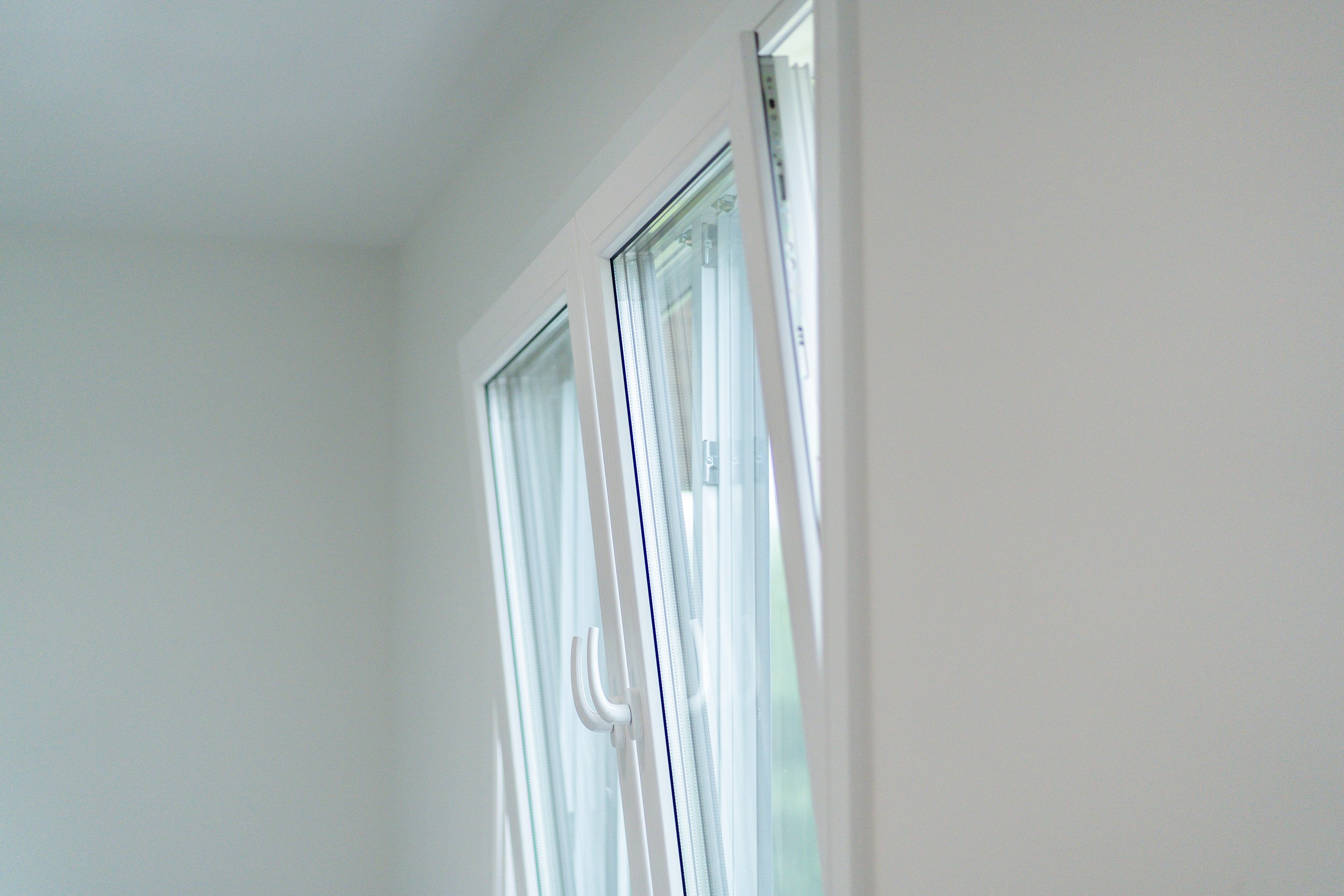
GALAA uses uPVC profiles from GEALAN with multiple internal chambers.CoreLine runs a five to six chamber profile with a two gasket sealing system.ProLine runs a six chamber profile with three gaskets. Both carry steel reinforcement through the frame.
Each chamber is a sealed pocket of still air, and still air is a poor conductor. Stack five or six across the depth of the profile and you interrupt the thermal path from outside to inside repeatedly. That is why chamber count belongs in the conversation alongside frame material.
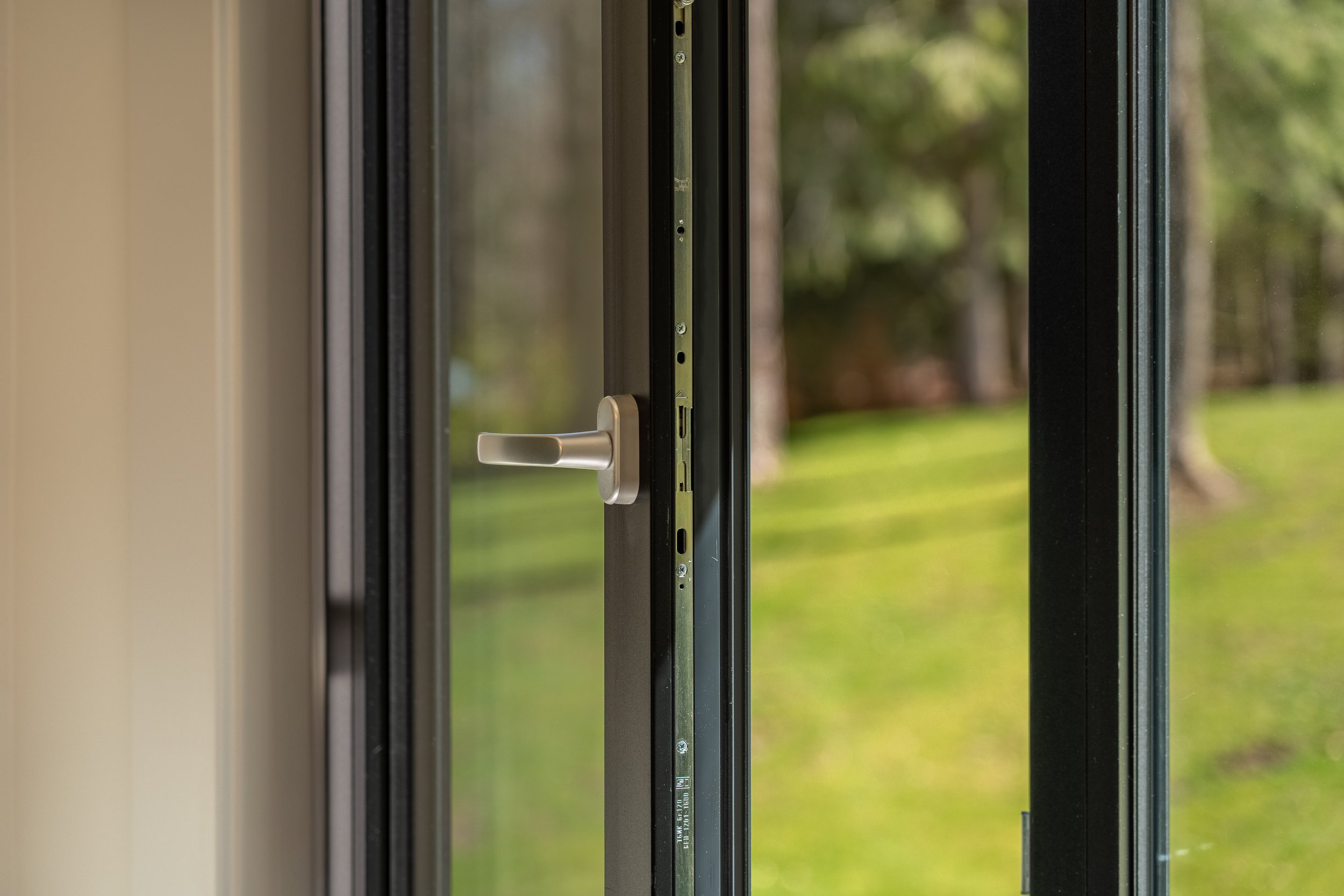
The gaskets do similar work at the perimeter, compressed by multi-point locking hardware when the sash closes. That is what produces the air seal, and the air seal is what keeps a January wind out of a room.
We covered the material question directly inaluminum versus uPVC windows.
Double pane or triple pane in Connecticut
Both are legitimate here, and the honest answer is that it depends on the house.
Double glazed units with a quality Low-E coating clear the Connecticut code minimum comfortably and serve most replacement projects well. Triple glazing earns its cost in specific situations: an inland home in the Litchfield hills where design temperatures run colder, a Passive House or Net-Zero project where the energy model needs the low end of the U-factor range, or a house on a loud road where the acoustic benefit matters as much as the thermal one.
GALAA uses Cardinal glass in both double and triple pane configurations. Our systems carry an STC rating of 31 to 37, which is the number to look at if noise is part of the problem you are solving.
We answered the triple pane question at length indo all European style windows contain triple pane glass, and the short version is no, and you should not assume it.
The rating almost nobody reads
Every NFRC label carries three numbers. U-factor and SHGC get discussed. Air Leakage gets ignored.
That is backwards for Connecticut. Air leakage is the rating that tracks most directly with what you actually feel standing next to a window in February. A window can post a respectable U-factor and still leak around the sash, because U-factor measures conduction through the assembly, not air moving past it.
This is where operating style matters. A double hung sash slides in a track and seals against weatherstripping that wears. A tilt-turn sash is pulled tight against continuous gaskets by locking points around the full perimeter. Those age differently.
GALAA windows carry NFRC certified ratings, so the numbers on the label are third party verified rather than manufacturer claims.
When it is actually time to replace
Not every draft means new windows. Fogging between the panes means the insulated glass unit has failed and that unit needs replacing. A sash that binds may just need hardware or weatherstripping. Those are repairs.
The signs that point to replacement are structural: rot in the frame, a sash that no longer sits square in the opening, single pane glass with storm windows, or a heating bill that keeps climbing while everything else in the house stays the same. We laid out the diagnostic inhow to tell if your windows need replacement or repair, and there is more on the cost side inhow new windows can lower your heating and cooling bills.

Installation decides whether any of this matters
A window rated at 0.15 installed badly performs like a window rated much higher. The air seal is created at the perimeter of the rough opening, not at the factory.
That means proper flashing, a continuous air seal between frame and framing, insulation in the shim space that does not compress the frame, and a unit set square so the locking points engage as designed. In a Zone 5A house the flashing also has to handle wind driven rain and freeze thaw cycles.
This is where most of the performance gets won or lost, and it is why we handle installation rather than shipping product and hoping.
What we are not
Worth being direct about it. GALAA is not a retail window seller. No stock catalog, no shelf inventory. Every unit is manufactured to order in Plainville, sized to the opening it fills. That is why the seal performs and why the timeline involves planning rather than a same week install.
We also do not publish flat pricing. A real number depends on the openings, the configuration, the glass package on each elevation, and the framing behind the existing units. That comes out of a walkthrough.
Frequently asked questions
Is all of Connecticut in Climate Zone 5?
Connecticut is classified as Zone 5A under the 2021 IECC, which the state adopted into the 2022 Connecticut State Building Code. The 5 indicates a heating dominated climate and the A indicates humid conditions.
What U-factor does Connecticut code require?
Zone 5 residential fenestration must meet a U-factor of 0.30 or lower under the 2021 IECC. ENERGY STAR Northern zone certification sets a tighter bar at 0.22 or lower with a minimum SHGC of 0.17. GALAA windows run 0.15 to 0.28.
Does the code limit SHGC in Connecticut?
No. There is no SHGC requirement for Zone 5 through Zone 8, because winter solar gain works in your favor in a heating dominated climate. That makes SHGC an orientation by orientation decision rather than a single target.
Are triple pane windows worth it in Connecticut?
Sometimes. They make sense for colder inland sites, high performance energy targets, and noise problems. A well specified double glazed unit clears code and serves many Connecticut homes well.
Is ENERGY STAR the same as the energy code?
No. The energy code is mandatory and ENERGY STAR is voluntary, and they use different zone maps. A window can meet Connecticut code and still not carry ENERGY STAR Northern certification.
The short version
Climate Zone 5A is not trivia. It sets the code number your project has to clear, it determines which ENERGY STAR criteria apply, and it explains why SHGC advice written for Georgia does not transfer to Connecticut.
The floor is a U-factor of 0.30. Everything above that floor is a choice about how the house feels in February and what the heating bill looks like in March.
Call us at (860) 515-7203 or stop by 272 Camp Street in Plainville. We will look at your openings, talk through what each elevation needs, and give you real numbers for your house rather than a range pulled off a brochure.
