
The question was simple. A homeowner in West Hartford wanted to know whether she could get her tilt-turn windows in anthracite gray on the outside and white on the inside, and whether the wide living room unit could run three inches past the standard size to line up with framing that was already in the wall.
The dealer rep wrote it down. He would have to check with the manufacturer. Four days later the answer came back, and it was not really an answer. The color might be available. The size might add cost. He was still waiting to hear. She had two follow-up questions, and he had to check again.
That is the experience most people picture when they think about buying windows, because for decades that was the only way to buy them. There is a manufacturer somewhere, and between you and that manufacturer sits a distributor, a dealer, a sales rep, and a showroom. Every question you have travels up that chain and every answer travels back down, losing detail at each stop.
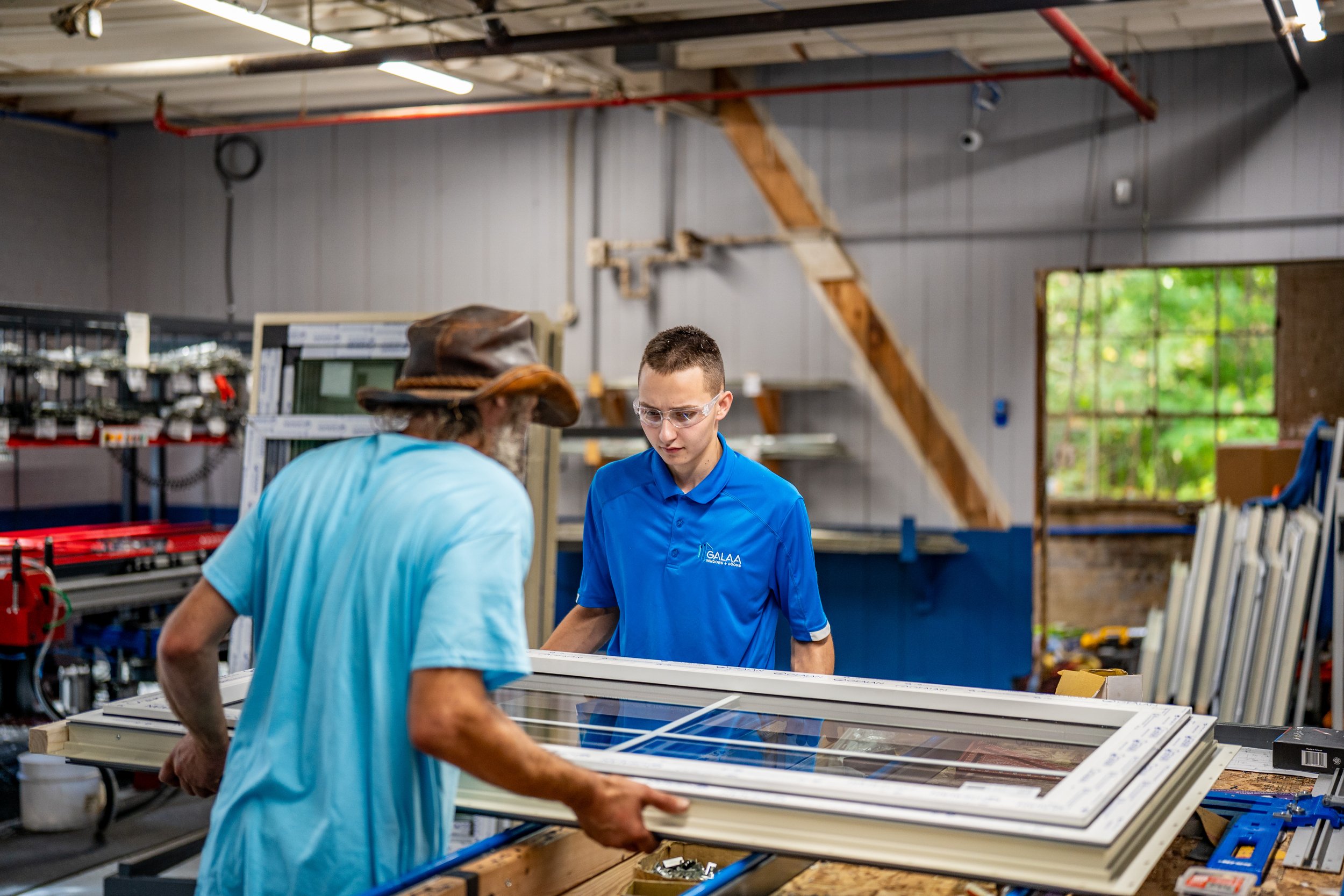
Factory direct removes the chain. When the company that builds the window is the company you are talking to, the person who can answer the question is the person who made it. We build tilt-turn windows in Plainville and ship them straight to projects across Connecticut, New York, and New England, so this is the model we run on. Here is what it actually changes, beyond the line everyone already knows about price.
What Factory Direct Really Means
Start with the honest definition, because the phrase gets thrown around loosely.
Factory direct means there is no dealer network and no distribution layer between the factory and your project. You are not buying a window that a manufacturer sold to a distributor, who sold it to a dealer, who sold it to you out of a showroom they have to pay rent on. You are buying it from the people who cut the profile, set the glass, and fit the hardware.
Local adds a second thing on top of that. The factory is close enough that the supply chain ends in your state instead of starting on another continent. For a Connecticut project, that means the windows are built in Plainville and trucked to a site in Fairfield or Litchfield County, not staged at a port waiting to clear customs.
Most of the real advantages come from those two facts working together. Take them one at a time.
The Price You Pay Is the Window, Not the Overhead
This is the part people already understand, so we will keep it short and point you to the deeper breakdown.
When you buy through a dealer, the price covers a lot of things that are not your window. Distribution markup. Dealer markup. The marketing budget. The showroom you walked into and the staff who work there. None of that makes your window perform better. It just rides on top of the number.
Factory direct strips that stack out. You are paying for materials, engineering, and labor, plus an honest margin for the people who built it. On a project specifying twenty or thirty windows, that difference is not rounding error.
But price is the smallest part of the factory-direct story, and the part that gets the most attention only because it is the easiest to put on a flyer. The rest matters more over the life of the window.
You Can Build the Window You Actually Need
A dealer sells from a catalog. The catalog exists because it is easier to sell a fixed set of options than to handle anything custom, and every option outside that set becomes a special order, a delay, and a question the rep has to send up the chain.
A manufacturer does not have that constraint, because the manufacturer is the one who would build the special order anyway. In our case there is no stock catalog to sell from in the first place. Every Galaa window is built to order, cut and assembled to the exact specification of the project it is going into, so what a dealer would treat as a custom exception is simply the standard way we work. When you talk to us directly, the conversation is about what your project needs, not what fits a fixed set of options.
That covers the obvious things. Exact opening sizes instead of the nearest stock dimension. Color on the inside that does not have to match the color on the outside. The frame finish, including wood-grain laminates, that suits the room rather than the showroom display. It also covers the things that actually drive performance. The glazing package gets tuned to the application, so a bedroom facing a busy stretch of Route 1 can spec for sound while a south-facing great room specs for solar gain. The chamber count, the gasket count, the hardware, the glass, all of it gets matched to the job instead of pulled off a shelf.
A CoreLine window covers most Connecticut homes at strong value with a 5 to 6 chamber GEALAN profile and two sealing gaskets. A ProLine steps up to a 6 chamber profile, three gaskets, and RC2 burglary resistance for projects building toward higher performance. Which one is right depends on your project, and figuring that out is a conversation, not a checkbox.
One Company Owns the Answer
Here is the structural problem with a dealer chain that nobody markets, because it only shows up when something goes wrong.
When a window is sold through multiple hands, responsibility gets divided along the way. The manufacturer points to how the dealer specified it. The dealer points to how the installer hung it. The installer points back at the product. Everybody in that chain is technically right about their own piece, and you are the one standing in the middle of a finished house with a window that does not close evenly in February.
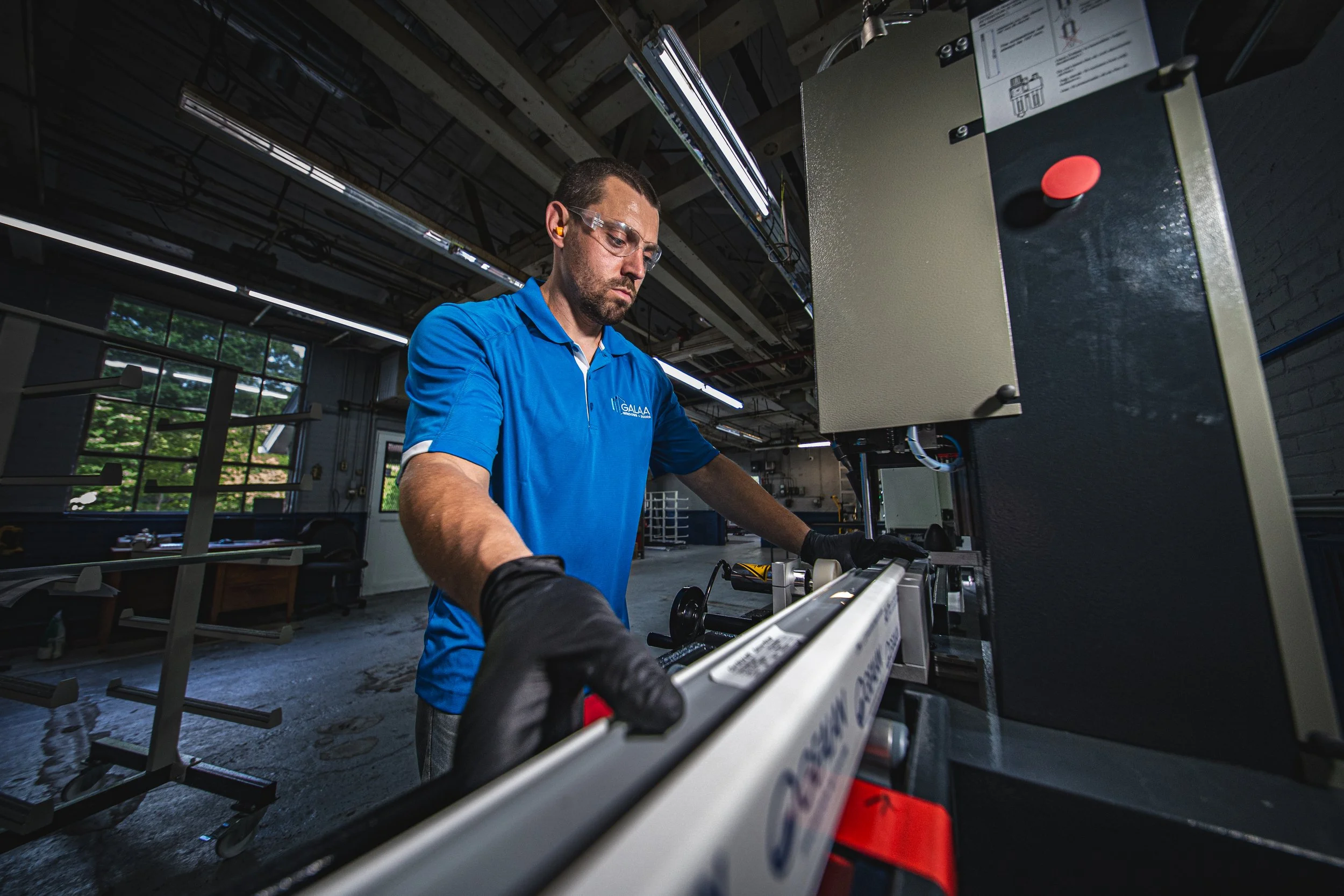
Factory direct collapses that. We engineered the window, we built it, and we are accountable for how it performs. When you have a question during the project, you are not waiting four days for a rep to check with someone. You are talking to the people who know the actual answer, in the same time zone, in the same language, without a layer of translation in between. That sounds small until you are mid-build and a decision is holding up your framing crew.
You Can Know How It Was Built
Most homeowners never get to ask how their window was actually made, because the dealer selling it does not build it and often does not know in any real detail.
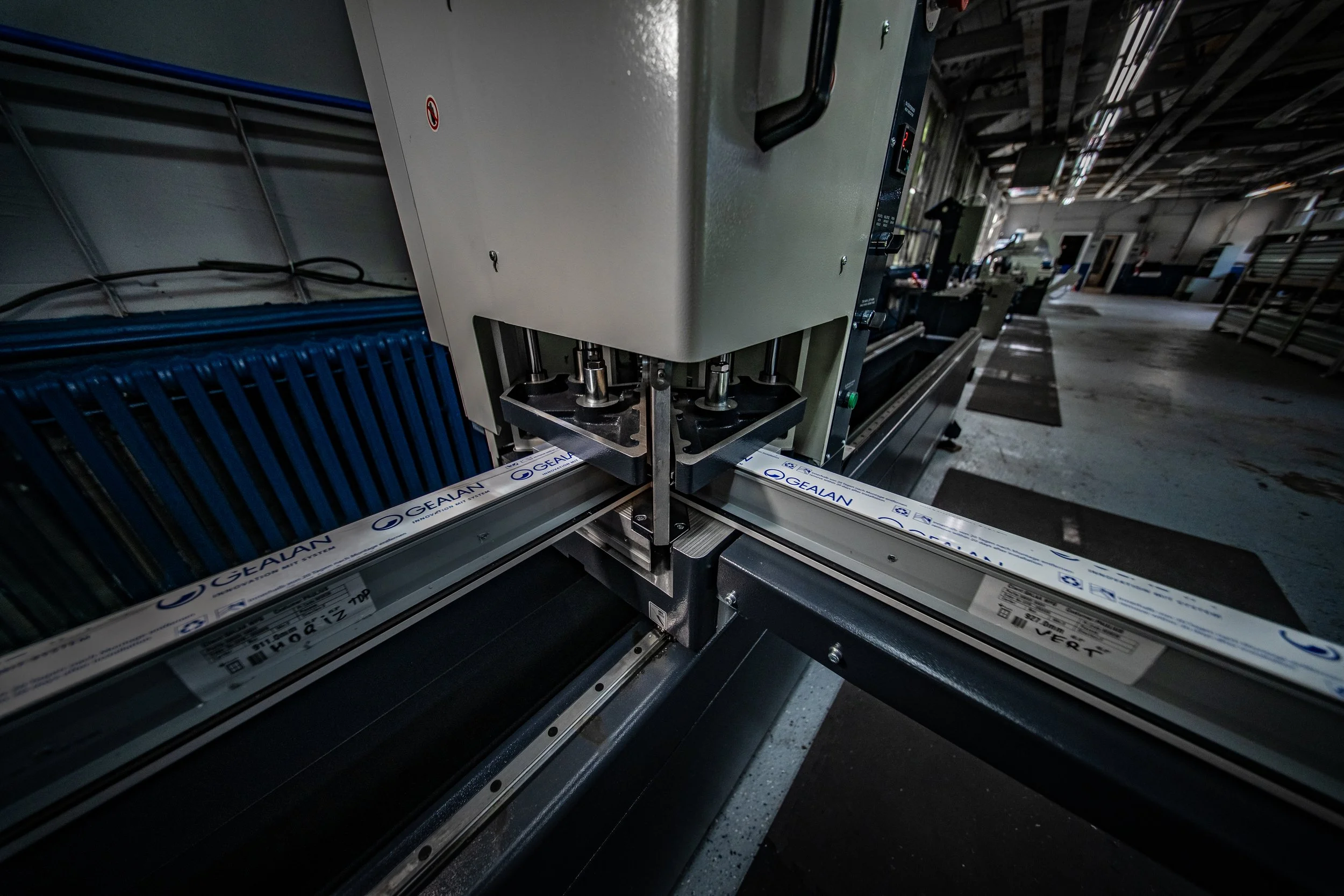
When the manufacturer is local and direct, that information is available. You can know that the frame carries steel reinforcement through the profile, not just at the corners. You can know the hardware is WINKHAUS multi-point, the same German hardware specified on serious European tilt-turn windows, not a generic substitute that looks the same in a brochure. You can know the glass is Cardinal triple-glazed, and what the U-factor and STC numbers mean for a Connecticut climate where you run heat five months a year.
That transparency is not a marketing courtesy. It is the difference between a thirty-year window and a twelve-year one, and it is invisible in a showroom. The only way to be sure of it is to deal with the people who put it together.
The Schedule Runs in Weeks, Not Months
A short supply chain is a fast supply chain. When the factory is in Plainville, the window does not sit on a container ship or wait at a port. It gets built and it gets trucked to your site.
For anyone running a build, that matters as much as the price. Window openings left waiting are openings exposed to New England weather, and trades sitting idle waiting on delivery are trades you are still paying for. A local factory-direct order moves on a timeline you can actually plan a build around. That predictability is worth real money on a job in Avon or Cheshire where the framing is up and the envelope needs to close before the first hard freeze.
Who Drives to Your House in Year Four
A window is a thirty-year purchase, so the relationship does not end when the truck leaves. The question that matters down the road is who handles it when a sash needs adjusting or a gasket needs attention after a decade of Connecticut freeze-thaw cycles.
With a dealer chain, that answer is complicated and often involves the same finger-pointing that shows up during the build. With a local manufacturer, it is simpler. We made the window, we know the hardware, and we are here in Connecticut rather than at the end of an international service line. If something needs attention down the road, you have a local team to reach, and being close by is what makes that kind of support practical rather than theoretical.
The Honest Part
Factory direct is not a magic discount, and we are not a retail operation. We do not do weekend swap-outs or sell a single window off a price book the way a big-box store does. We build to spec, which means the right fit is a project with a real scope, not a one-off impulse buy.
It also means we will tell you when you are over-buying. If a CoreLine package meets your spec, we are not going to push you into ProLine to pad the number. A lot of national-brand reps will not say that, because their incentive runs the other way. Ours does not, because the relationship is direct and we would rather build the right window than the most expensive one.
The Bottom Line
Buying windows factory-direct from a local Connecticut manufacturer changes more than the price tag, even though the price tag is the part everyone leads with. It changes whether you can build the window your project actually needs. It changes who answers when you have a question, during the build and ten years after it. It changes how fast the windows show up, and it changes who is standing behind them for the next three decades.
The dealer model put four people between you and the window. Factory direct takes them out. What you get back is a shorter line to the people who built it, and a manufacturer who is accountable for how it performs in your house, in your climate, on your schedule.
If you are planning a new build, a renovation, or a deep retrofit anywhere in Connecticut, New York, or across New England, reach Galaa Windows and Doors at (860) 515-7203 or visit galaawindows.com and we will walk through your project and what factory-direct actually looks like for it.
