
How to Tell If Your Windows Need Replacing: 7 Warning Signs Connecticut Homeowners Miss

There is a corner of a bedroom in a 1990s colonial outside West Hartford that has been ten degrees colder than the rest of the room for the last three winters. The family who lives there knows it. They put a heavier blanket on that side of the bed. They moved the dog crate to the warmer wall. They stopped thinking about it.
That is how windows fail in Connecticut. Not all at once. Not with broken glass or visibly rotted frames. They fail quietly, one winter at a time, and the people living with them adapt faster than they realize.
By the time the damage is obvious, the performance has usually been slipping for a decade. The heating bill went up gradually. The cold spot became "just how that room is." The fog in the corner of the window became part of the view.
If you have not replaced your windows since the late 1990s or early 2000s, the signs below are likely already in your house. Most of them are easy to miss because they happen on a timeline longer than your attention span for them.
1. Ice Dams Forming Above Specific Windows But Not Others
Most people blame ice dams on the roof. Bad insulation in the attic. Inadequate ventilation. Soffit problems. All of those can be true.
What gets missed is when ice dams form consistently above the same two or three windows while the rest of the roofline stays clear. That is a thermal bridging clue. Heat is escaping through those specific window assemblies at a higher rate than the surrounding wall, melting the snow on the roof directly above them, then refreezing at the eaves where the surface is colder.
If you have noticed icicles forming reliably above the same windows every January, the windows are leaking heat at a different rate than the rest of the envelope. The roof is reporting on a problem the wall cannot.
This one shows up on north-facing and east-facing elevations most often, especially in older Hartford County and Litchfield County homes where the original windows are still in place. A good performance benchmark to compare against: a high-performance European tilt-turn window typically holds a U-factor between 0.15 and 0.20, versus 0.40 to 0.50 for a builder-grade double-hung from the early 2000s. That gap is wide enough to show up on your roof.

2. Spider Webs in the Same Corner of the Window Frame Every Year
This sounds strange. It is the kind of thing contractors notice and homeowners do not.
Spiders build webs where air moves. A draft pulls insects toward it, and the webs follow. If you find webs in the exact same corner of the same window every spring, no matter how often you clean, you have a consistent air leak in that exact spot. The geometry of the frame has shifted, or a gasket has failed at that corner, and air is moving through year-round.
Walk through your house in late summer and look at the upper corners of every window frame. If you see a pattern, it is not a coincidence. It is a leak telling you where it is.
This is one of those signs that sounds too simple to take seriously, until you start checking and realize it has been true the whole time.
3. Condensation on the Inside of the Glass Every Winter Morning
A little fog on a cold morning is normal. Persistent moisture running down the inside of the glass is not.
When warm interior air meets a cold glass surface, water condenses. On a high-performance window, the inner pane stays close to room temperature because the glazing and frame insulate well enough to keep that surface warm. On an aging double-pane unit or a single-pane window, the inner surface gets cold enough to pull moisture out of the air every time the temperature outside drops below freezing.
If you are wiping down window sills every January morning, the window is not the problem. The window is the symptom. The real issue is poor thermal performance, and no amount of weatherstripping fixes the glass itself. Over time, that recurring condensation also rots the sill from the inside out, which brings us to a sign most people only spot once it is too late.
4. The Wall Around the Window Tells a Story the Window Does Not
This is the one that gets missed most often, because people look at the window itself and not at what is around it.
Check the drywall, trim, and paint around your windows, especially on north-facing and west-facing walls in older homes across Fairfield County and New Haven County. Look for peeling paint near the corners of the frame. Soft spots in the trim or sill when you press on them. Slight discoloration or staining on the drywall below the window. A faint musty smell in the room during humid weather. Hairline cracks in the drywall radiating from the corners of the window opening.
Any one of these on its own is not conclusive. A combination of two or three points to water finding its way past the window flashing or through failed seals, then sitting inside the wall cavity. By the time you see it on the drywall, it has been happening for a while.
This is the kind of damage that gets expensive if you wait. Replacing windows when there is rot in the framing behind them costs significantly more than replacing windows when the surrounding structure is still intact. If you are already opening walls for any other renovation, this is the moment to deal with the windows too. Galaa's CoreLine and ProLine systems are built for exactly that scenario.
5. The Sash Is Heavier Than It Used to Be
Old wood double-hung windows used sash cords or spring balances to keep the sash up when you opened it. Over the years, the wood absorbs moisture, swells, and gets heavier. The balances wear out. The cords stretch or break.
You probably did not notice the day it changed. You just started using two hands instead of one. Or you started propping the window open with a book because it would not stay up on its own.
That gradual weight change is the wood telling you what is happening inside the frame. Moisture is getting in. The sash is no longer the dimension the manufacturer designed it to be. The seals around it are no longer compressing properly because the geometry has changed.
This shows up on a slower timeline than the other signs, which is exactly why it gets missed. You adjusted. The window did not get better. It got heavier.

6. Outside Noise Is Louder Than It Used to Be, Even Though Nothing Outside Changed
If you live near I-95, I-91, I-84, the Merritt Parkway, or any of the busy state routes, you are used to a baseline of road noise. What you may not have noticed is whether that baseline has gotten worse over the last few years inside your house, while everything outside stayed the same.
Sound travels through gaps and through glass. As window seals fail, more sound gets through. As an insulated glass unit loses its argon or krypton fill, the acoustic damping drops noticeably. The road has not changed. Your windows have.
This one is easy to test. Stand in the middle of a room with the windows closed and listen. Then put your ear close to the frame and listen again. If the difference is dramatic, the seal is doing very little work. Modern multi-chamber uPVC windows with proper compression gaskets cut exterior noise significantly, often by 30 STC points or more, which is the difference between hearing conversations on the street and not knowing anyone is out there. We covered the specifics on noise reduction in oursoundproof windows guide for homes near Connecticut highways.
7. Hardware That Has Gotten "Quirky"
The latch that only catches if you lift the sash a little. The lock that needs a wiggle. The window that opens fine in the summer but jams in February.
People accept these things. They become part of how the house works. But quirky hardware is almost always a sign that the window itself has moved. Wood frames swell and shrink with humidity, then settle out of square over time. Vinyl frames from the early 2000s often were not built with enough chambers to stay rigid through Connecticut's freeze-thaw cycles, so they bow over the seasons.
When the frame is out of square, the hardware cannot align properly. That means the sash is not pulling evenly into the seals when you close it, which means air and moisture get past every gasket the manufacturer installed. The hardware is the canary. What it is telling you is that the window is no longer a sealed unit.
Modern European-style tilt-turn windows solve this differently. Multi-point locking systems, like the WINKHAUS hardware used on Galaa'sCoreLine and ProLine windows, pull the sash into compression at several points around the frame. That keeps the seal even and the operation smooth for decades, even in tough climate zones like New England.
What These Seven Signs Actually Add Up To
Notice what is not on this list. Cracked glass. Visibly rotted frames. Windows that fall off their tracks. Those are easy calls. You already know what to do.
The harder calls are the ones above. The signs that arrived slowly, that you adjusted to without realizing, that became part of the house instead of problems to solve. Energy bills crept up. Comfort dropped a little each year. The cold corner became normal. The webbed corner became a cleaning problem instead of a draft problem.
This is the gap most homeowners live with for years. It is also the gap that high-performance windows close.
When Replacement Actually Makes Sense
Not every sign on this list means you need new windows tomorrow. A single fogged unit can sometimes be reglazed. A sticky latch can be adjusted. Worn weatherstripping is a hundred-dollar fix on a good weekend.
Replacement makes sense when you are seeing several of these signs across multiple windows, when the frames have lost their structural integrity, when you are already planning a major renovation ordeep energy retrofit, when your heating and cooling costs have climbed past the point where the math on a new package starts to pay back, or when you are building toward Passive House or Net-Zero targets and your current windows cannot get you there.
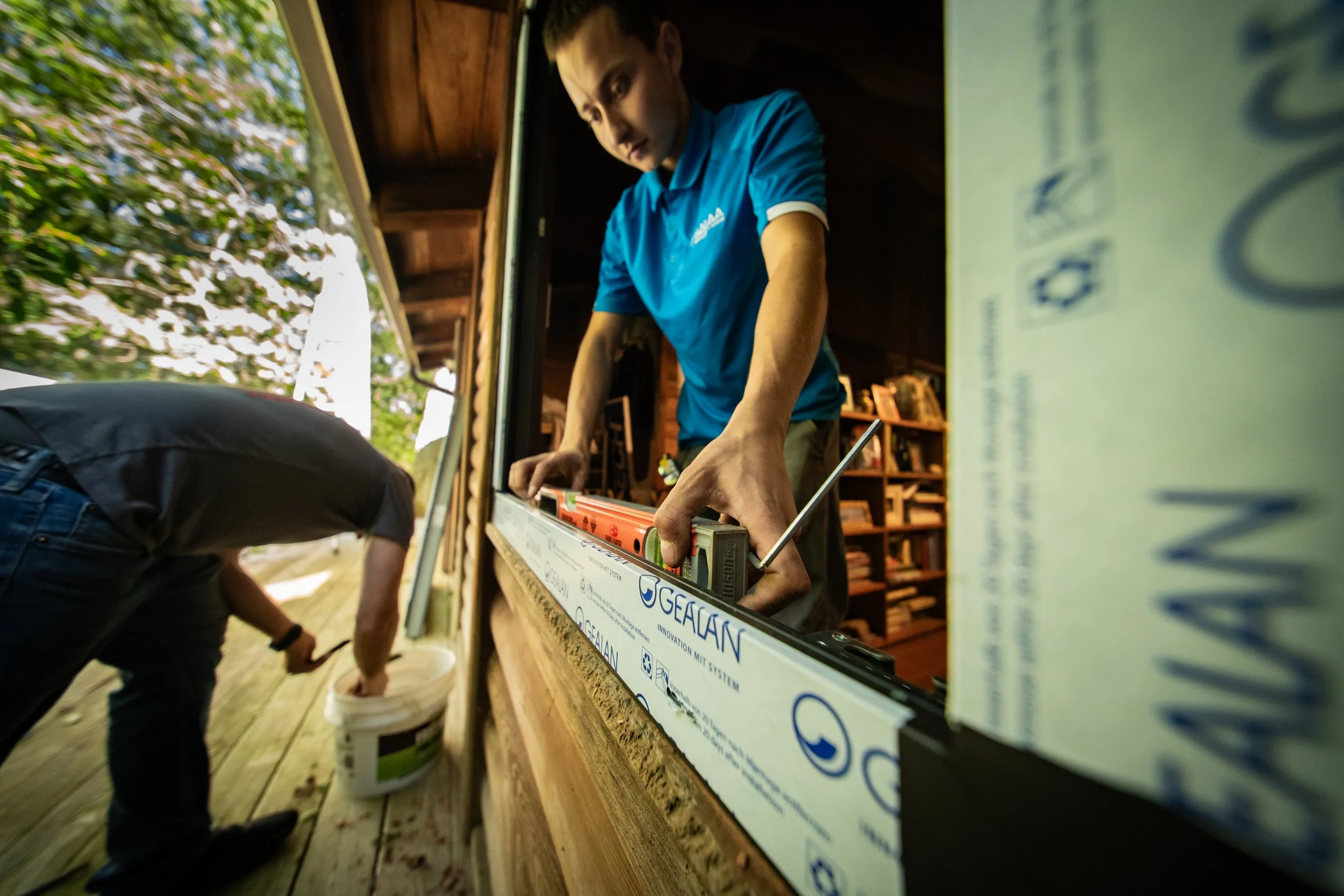
For new construction and significant renovations in Connecticut, New York, and across New England, this is where high-performance European tilt-turn windows earn their place. Galaa manufactures CoreLine and ProLine windows at our facility in Plainville, Connecticut, built with Gealan multi-chamber uPVC frames, Cardinal triple-pane glass, and WINKHAUS multi-point hardware. They are designed for the climate we live in, not a generic North American spec. If you are curious why more Connecticut architects are specifying European-style windows on new builds,we wrote about that too.
The Real Cost of Ig noring the Quiet Signs
Here is what to keep coming back to. The family in the West Hartford colonial did not have a window problem in their minds. They had a cold corner. The cold corner was the window problem. They just spent three winters paying for it in heat, comfort, and slow water damage they will find when they pull off the trim someday.
Your windows are talking to you. Most of what they say is quiet. The ice above the gutter. The web in the upper corner. The fog at the bottom of the glass. The latch you wiggle. The dog crate you moved.
If two or three of these signs sound familiar in your own house, that is worth taking seriously now, not after the framing rots.
When you are ready to plan a new build, an addition, or a serious retrofit anywhere in Connecticut, get in touch throughgalaawindows.com. We will help you figure out whether CoreLine or ProLine is the right fit, what the glazing and hardware spec should look like for your climate zone and design goals, and how to make sure the next set of windows in your house outlasts the people who installed them.
Reach Galaa Windows and Doors at (860) 515-7203 or visitgalaawindows.com to explore their window systems and schedule a consultation.
