
Net-Zero Home Construction in Connecticut: How Windows Fit Into the Equation

Every conversation about building a net-zero home in Connecticut eventually lands on the same handful of topics. Solar panels. Heat pumps. Spray foam insulation. Airtight framing details. Those conversations are worth having. But there is one component that keeps getting pushed toward the end of the specification process, sometimes skipped over entirely until a blower door test reveals the building envelope is losing far more heat than the energy model predicted.
That component is windows.
We have this conversation regularly here at GALAA. Builders reach out mid-project, after framing is done and the mechanical rough-in is already on the schedule, asking whether our window systems will help them reach their energy targets. Usually the answer is yes. But the more useful answer is that fenestration should never be an afterthought in a net-zero build. In Connecticut, where winters get extremely cold and where energy code requirements are actively tightening, the window specification shapes almost every other decision in the building. It affects how large the mechanical system needs to be, how many kilowatts of solar the roof has to produce, and whether the home can reach net-zero without overcorrecting everywhere else.
This post lays out exactly how windows fit into the equation, what the performance numbers actually mean for a Connecticut home, and how to make the fenestration decision before it becomes the thing that limits the rest of the project.
What Net-Zero Actually Requires in Connecticut
Net-zero energy means the home produces at least as much energy as it consumes over the course of a year. The production side is typically rooftop solar. The consumption side is everything the building uses to stay heated, cooled, lit, and running. The goal is to balance those two sides over twelve months.
The math sounds simple. In practice, it depends almost entirely on how well the building envelope performs. A home that is poorly sealed and poorly insulated burns through heat so fast that no reasonable solar array can offset the demand. A home with a tight, thermally efficient envelope needs dramatically less energy to maintain comfortable temperatures, and therefore needs a much smaller solar system to reach zero.
That relationship between envelope performance and solar system size is something builders sometimes underestimate. A net-zero home is not a standard home with solar panels bolted on. The whole approach works because the envelope does the heavy lifting first, and the solar handles whatever is left over. Studies on Passive House construction in cold climates consistently show that a high-performance building envelope can reduce the required solar array size by 30 to 50 percent compared to a code-minimum build. That is a real cost difference, and it compounds over the life of the system.
Connecticut is currently reviewing the 2024 International Energy Conservation Code for adoption alongside Massachusetts, New York, New Jersey, and several other Northeast states. The code direction is clearly toward tighter envelopes. Builders specifying windows for net-zero projects in Connecticut right now are not just meeting the current standard. They are building to where the standard is going, which is the smarter position.
Why Windows Are the Weak Link in Any Tight Envelope
Here is the core tension in net-zero window design. Glass is beautiful, light is important, and most modern home designs use generous amounts of glazing. But glass is also the worst-performing component in the building envelope by a significant margin.
A well-built exterior wall in a net-zero Connecticut home might achieve somewhere between R-30 and R-40 in effective thermal resistance. A standard double-pane vinyl window achieves roughly R-3. That is not a small gap. It is an order-of-magnitude difference. A single square foot of window loses roughly ten times as much heat as a single square foot of well-insulated wall.
Scale that across a typical home with 180 to 250 square feet of total glazing — which is conservative for most contemporary designs — and the cumulative heat loss through the windows can exceed the heat loss through all of the walls, ceilings, and floor assemblies combined. That is the problem a net-zero fenestration specification has to solve. You cannot insulate your way to zero if you are surrendering heat through 20 windows performing at R-3.
The path forward is not to reduce window area to near nothing. Most homeowners building a net-zero home in Connecticut are doing it because they want a home that performs well and lives well, not a bunker with porthole windows. The path forward is to treat fenestration as a critical performance system, not a commodity product, and to specify windows that close the gap between glass and wall performance as much as reasonably possible.
The Numbers That Actually Matter
There are three performance metrics that determine how a window behaves in a net-zero build. They appear on the NFRC label for every certified window product, and they each tell you something different.
U-Factor
U-factor measures how quickly heat passes through the complete window assembly, including the frame, spacer, and glass together. Lower numbers mean less heat escapes. This is the primary thermal performance metric for cold climates.
Connecticut code minimum for windows in new residential construction currently sits at U-0.30. That is the floor, not the target. For a net-zero project, the target is closer to U-0.20 or below, and for projects pursuing PHIUS certification or DOE Zero Energy Ready Home status, the expectation is U-0.15 or better. Our ProLine window system, built on Gealan's 6-chamber uPVC profile with Cardinal triple-pane glazing and low-E coating, achieves a U-factor range of 0.15 to 0.28 depending on glass configuration. The CoreLine, using a 5 to 6 chamber Gealan profile with the same glass options, hits the same range. Both systems were designed with exactly these performance targets in mind.
To give that number some physical meaning: sit next to a U-0.35 window on a 15-degree night and you feel cold radiating off it even if there is no draft at all. The glass surface is cold, and that cold radiates into the room and affects how the space feels. Sit next to one of our windows under the same conditions and the surface is noticeably warmer. The thermal barrier is doing its job.
Solar Heat Gain Coefficient
SHGC measures what fraction of solar radiation passes through the glass into the home. This matters in net-zero design because south-facing windows that let winter sun in are actually doing useful heating work. A south-facing window with an SHGC of 0.45 on a clear Connecticut December day contributes meaningful free heat to the home's energy balance. That contribution shows up in the energy model and allows the solar array or mechanical system to be sized accordingly.
North, east, and west-facing windows are a different story. They receive less useful winter sun and more unwanted summer heat. Those openings benefit from a lower SHGC to reduce cooling load in the warm months.
One of the most common errors we see in net-zero fenestration specifications is treating SHGC as a single number across all window openings. It should not be. Orienting the glazing strategy by facade orientation is one of the few things a builder can do that costs almost nothing at the specification stage but has a measurable effect on the annual energy model.
Air Leakage
The number on the NFRC label is expressed in cubic feet per minute per square foot of window area. Lower is better. For net-zero projects, this number matters as much as U-factor, because even a thermally excellent window contributes to blower door failure if air is moving freely around the frame or through the hardware.
Our window systems use triple gasket sealing combined with Winkhaus multi-point locking hardware. The hardware draws the sash tight against the frame at multiple points simultaneously rather than just at the single latch location that most American double-hung windows rely on. The result is a consistent compression seal that holds its integrity across years of use. When builders tell us they passed their blower door test at 0.6 ACH50 or below, the window hardware is a significant part of why.
How PHIUS and DOE Zero Energy Ready Home Treat Windows
Both major net-zero certification pathways in the U.S. have specific, well-defined positions on fenestration performance.
The PHIUS standard, which is the Passive House Institute US approach adapted specifically for North American climate zones, requires triple-pane glazing with whole-window U-values at or below 0.15 for cold climate applications. Connecticut falls in a climate zone where those targets apply. The PHIUS approach also requires windows to be airtight when closed, to manage solar heat gain appropriately by orientation, and to create interior glass surface temperatures warm enough that occupants can sit comfortably near the glass without experiencing radiant cold.
The DOE Zero Energy Ready Home program aligns closely with PHIUS on fenestration. For homes achieving PHIUS certification using triple-glazed assemblies with appropriate thermal breaks and spacers, those windows are deemed to satisfy the DOE ZERH window requirement. Both standards are pointing toward the same performance zone, which is where our ProLine and CoreLine systems are engineered to operate.
What This Looks Like on an Actual Connecticut Project
A builder in Avon is planning a 2,400 square foot single-family home targeting DOE Zero Energy Ready Home certification. The architect's design includes 230 square feet of glazing, with a rear elevation facing south and a side elevation facing north. That is a reasonable glazing area for the square footage and actually creates an opportunity for passive solar contribution if the specification is thoughtful.
First decision: frame and glass. The builder gets a quote for standard double-pane vinyl windows at U-0.32. The energy model with that spec requires a 9.4 kilowatt solar array to hit the annual net-zero target. The builder then specs our CoreLine triple-pane system at U-0.18. The same model comes back at 6.9 kilowatts. The window upgrade adds roughly $5,000 to $7,000 to the project cost compared to the standard vinyl spec. The solar array reduction saves $8,000 to $12,000 in equipment and installation. The math favors the better window before you even account for energy savings over the building's lifespan.
Second decision: SHGC orientation strategy. The south-facing rear windows get a glass package with SHGC around 0.45, capturing passive solar heat gain on clear winter days. The north-facing windows get a package around 0.25, minimizing summer heat gain on that facade. This is something we work through with builders and architects at the specification stage. It does not change the product cost materially. It does change the annual energy balance in the model.
Third decision: installation detailing. A window performs at its rated U-factor only if it is installed in a way that maintains thermal continuity between the window and the wall assembly. If the frame sits in contact with the structural framing of the rough opening without a thermal break, that junction becomes a thermal bridge that bypasses the insulation. We provide installation guidance as part of working with project teams because the best window installed carelessly will underperform a mid-range window installed correctly.
The result of getting all three decisions right is a home that performs the way its energy model predicted, passes the blower door test at the required threshold, and produces enough solar to genuinely offset annual consumption. That is what net-zero looks like when it actually works.
Why We Built Our Systems Around Gealan Profiles
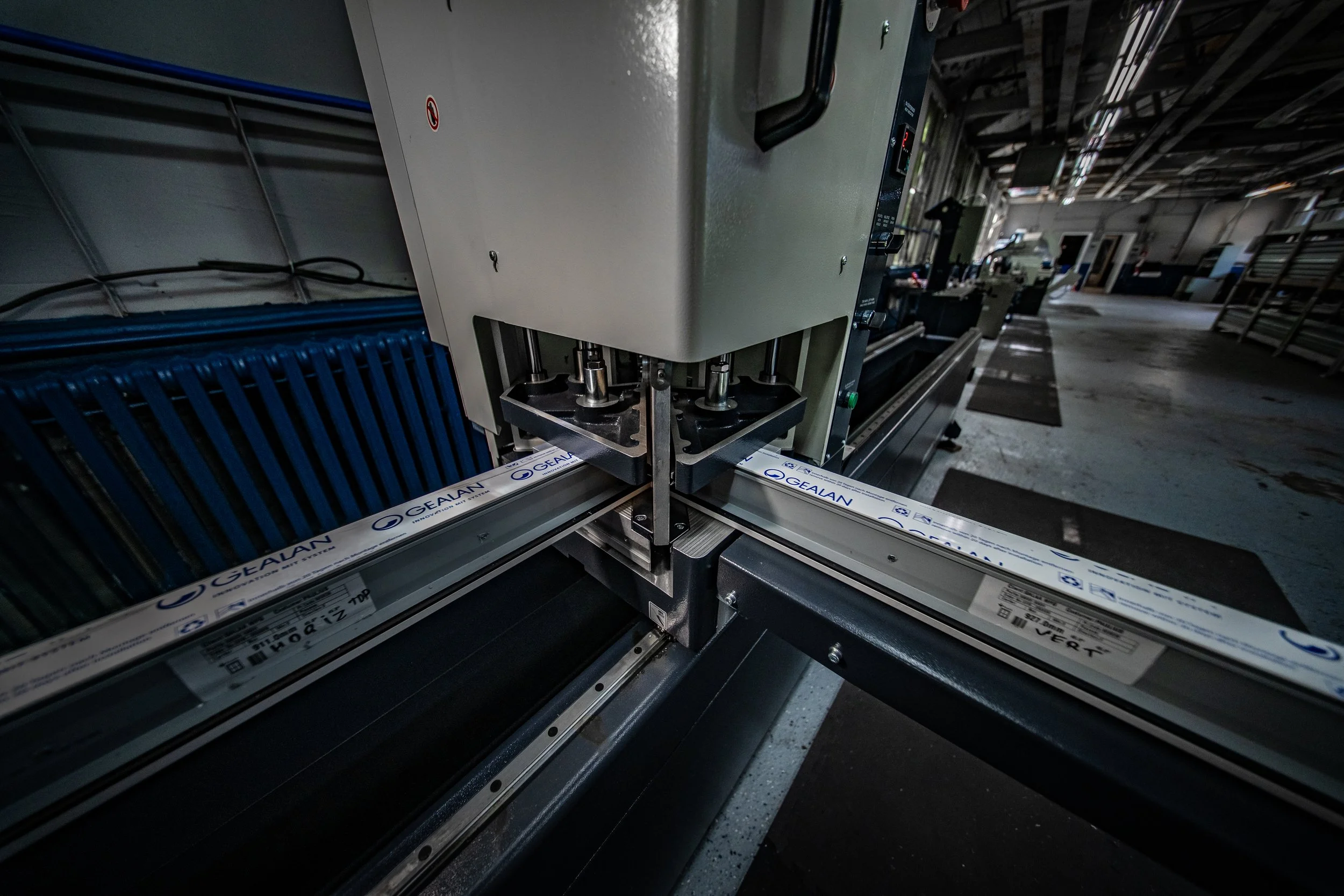
The frame material in a window is not a neutral choice. It affects thermal performance, dimensional stability through temperature cycles, seal longevity, and how well the hardware maintains its alignment over time. We spent considerable time on this decision before settling on Gealan uPVC profiles as the foundation for both our CoreLine and ProLine systems.
Gealan is a German manufacturer that has been producing window profiles for European markets for decades. In Germany, Austria, and Scandinavia, Passive House construction is mainstream. The products in those markets have been stress-tested by generations of cold, variable winters that are comparable to Connecticut's climate. Gealan profiles were not designed for mild temperatures. They were designed for exactly the kind of thermal cycling that Connecticut homes experience every single year.
The CoreLine uses a 5 to 6 chamber profile. The ProLine uses a full 6-chamber system. Each chamber traps a pocket of still air that adds resistance to heat conduction through the frame. More chambers mean the cold has more barriers to work through before reaching the interior. The frames also carry steel reinforcement inside the chambers, which provides structural rigidity for larger window openings without creating a thermal bridge, because the steel is isolated within the uPVC and never makes contact with the wall assembly.
The uPVC material itself matters for net-zero projects because of dimensional stability. Standard plasticized vinyl expands and contracts significantly through temperature swings. That movement stresses the seals, the corner welds, and the hardware alignment over time. uPVC, which removes the plasticizers from the formulation, moves much less. Seals stay compressed. Hardware stays aligned. The window performs at its rated specs after 15 years of Connecticut winters, not just on the day it was installed.
We assemble our window systems here at our Plainville, Connecticut facility. The glass comes from Cardinal, whose insulating glass units are manufactured in the U.S. and are among the best-performing in the North American market. The hardware comes from Winkhaus, whose multi-point locking systems are used widely across European high-performance construction. These are not brand decisions made for marketing purposes. They are sourcing decisions made because the components perform to the specs that net-zero projects in our climate require.

The Mistakes That Cost Net-Zero Projects the Most
Having worked on high-performance projects across Connecticut, we see the same errors come up in fenestration specifications often enough that they are worth naming directly.
The first is specifying the glass without specifying the whole assembly. A builder orders "triple pane" without defining the frame system, spacer type, or complete U-factor target. Triple-pane glass in a weak frame can easily land at U-0.26 or higher. That is not a net-zero spec. The NFRC rating for the complete window assembly is what the energy model uses and what certification reviewers check.
The second is using a uniform glass package across all orientations. Every opening in the house gets the same SHGC regardless of which direction it faces. South-facing windows are under-performing their passive solar potential. West-facing windows are overheating the home in summer. The fix costs nothing at the design stage and adds real value to the annual energy balance.
The third is treating the window installation as a standard carpentry task. No thermal break detailing, no attention to the junction between the frame and the wall assembly, no sealing protocol beyond standard housewrap tape. Even a U-0.15 window installed with a thermal bridge at every rough opening delivers something closer to U-0.22 in practice. Installation quality is not separate from window performance. It is part of it.
The fourth mistake is making the window decision last. By the time a builder calls us to ask whether our windows will get them to their energy target, the wall assembly is framed, the mechanical design is locked, and the solar array is already sized. If those decisions were made assuming standard glazing, there is no way to retroactively give the energy model credit for better windows. The fenestration conversation needs to happen at the design stage, alongside the wall assembly and mechanical specifications, not after they are set.
For Builders and Homeowners Building in Connecticut Right Now
Connecticut is moving toward stricter energy codes. The state is actively reviewing the 2024 IECC alongside the rest of the Northeast. Future versions will tighten envelope requirements further. The direction is clear, and it is not reversing.
For builders working on net-zero or high-performance projects, getting the window specification right is one of the highest-leverage decisions in the building. It affects the solar array size, the mechanical system capacity, the blower door outcome, and whether the certification pathway is achievable without expensive overcompensation elsewhere.
For homeowners building a custom home in Connecticut and trying to understand whether the upgrade to a high-performance window system is worth it, the answer in nearly every net-zero project is yes, and the payback is faster than most people expect because the window cost is partially offset by reductions in solar and mechanical equipment.
If you are working on a net-zero or high-performance project in Connecticut and want to talk through the fenestration specification, we are here for that conversation. We can work through U-factor targets, SHGC orientation strategy, installation detailing, and how our CoreLine and ProLine systems fit into your energy model and certification path. Reach out to our team at galaawindows.com or call us at (860) 515-7203. We are local, we build here, and we have worked through these decisions on enough Connecticut projects to give you useful answers quickly.
