
Sliding doors vs. Patio Doors: Which Is Right For Your CT Home?
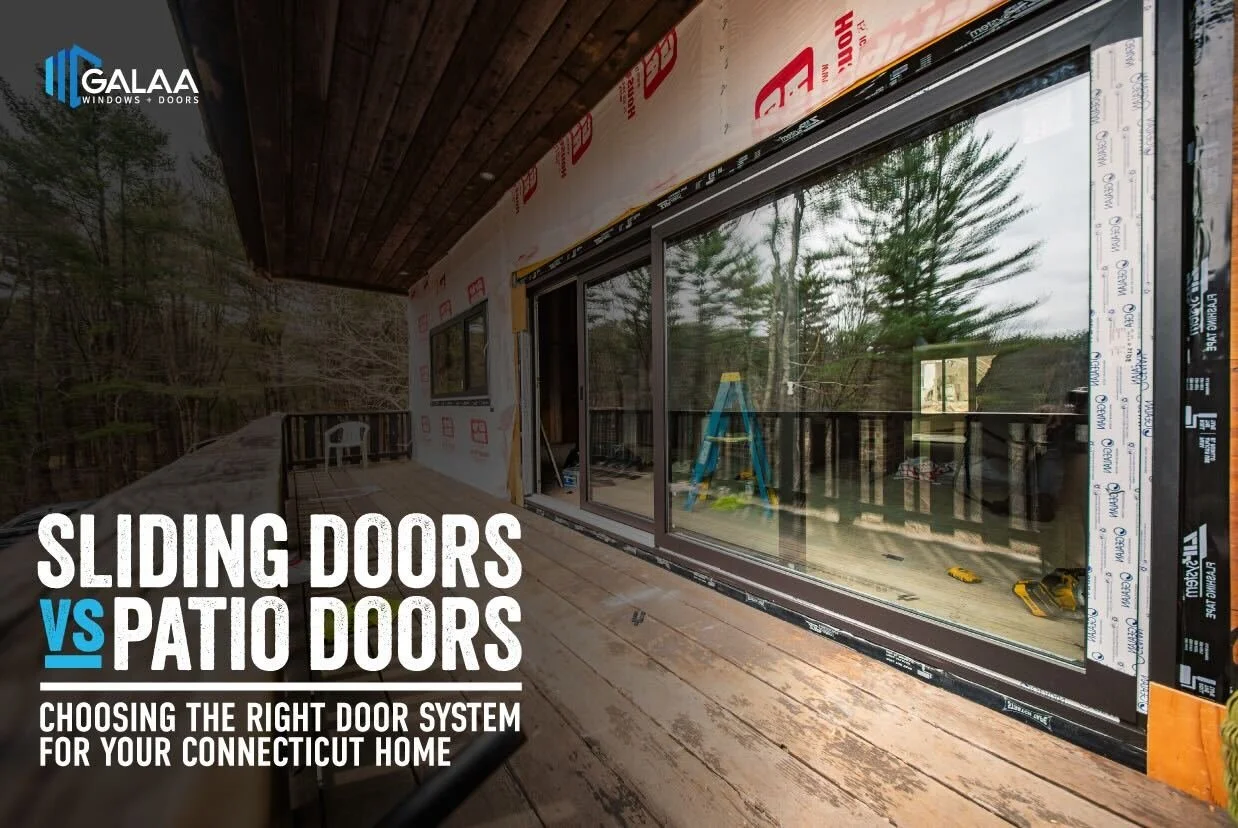
If you're renovating a Connecticut home or building new, one question comes up more than most people expect: sliding doors or patio doors?
It sounds simple. Both connect your living space to the backyard. Both let in light. But once you start comparing them seriously, the differences add up fast — how they seal against a January wind, how they operate after five years of daily use, and how much they add to your heating bill every winter.
I've seen homeowners in Connecticut make this choice based on looks alone, then regret it two winters later when the door starts leaking air or the track becomes stiff. So let's go through this properly.
What Is a Sliding Door?
A sliding door has one fixed panel and one panel that moves horizontally on a track. You slide it open, slide it closed. It doesn't swing into the room or out onto the deck, which makes it the practical choice whenever floor space is tight.
The standard version has been around for decades and is what you'll find at most big box stores. The track-based mechanism is simple, but it comes with trade-offs — debris collects in the bottom channel, seals wear unevenly, and in a Connecticut winter, that track can freeze.
GALAA's ProSlide System: A Different Standard
GALAA Windows and Doors, manufactured in Plainville, CT, offers a different category of sliding door through their ProSlide system. Built on a GEALAN 4-chamber profile frame with precision-engineered tracks, the ProSlide is designed to glide smoothly and seal tightly through years of use and extreme seasonal temperature swings.
The specs reflect the engineering: thermal insulation between 0.18 and 0.30 BTU/HR x FT² x °F, STC sound ratings between 29 and 41, up to RC2 burglary resistance, dual outer gasket sealing, and steel-reinforced frames. That's not what you find at a home improvement warehouse.
What Is a Patio Door?
"Patio door" gets used a few different ways, which is part of why this comparison gets confusing. In most conversations, it refers to a hinged door — typically a French-style design where one or two panels swing open on hinges. You'll see these on colonial homes, farmhouses, and traditional builds throughout Connecticut.
For this guide, a patio door means a hinged door system. That distinction matters because the two door types serve different spaces, different aesthetics, and different performance priorities.
GALAA's Patio Door Systems
GALAA's patio door line uses the same GEALAN 4-chamber profile technology as their sliding doors, but delivers even stronger thermal and acoustic numbers. The hinged design allows for tighter multi-point compression sealing against the frame, which helps explain why the specs push further.
U-values reach as low as 0.15 BTU/HR x FT² x °F, STC ratings go up to 47, and the same RC2 burglary resistance applies via WINKHAUS multi-point locking hardware. Fully customizable in finish, glass, and panel configuration to suit both modern and traditional homes.
Sliding Doors vs. Patio Doors: Direct Comparison
| Feature | Standard Sliding Door | GALAA ProSlide | GALAA Patio Door |
|---|---|---|---|
| Space Required | Low | Low | Medium to High |
| Energy Efficiency (U-Value) |
0.30–0.50 (typical) | 0.18–0.30 | 0.15–0.28 |
| Operation | Drag on bottom track | Precision glide on track | Push/pull hinged swing |
| Sound Protection (STC) |
Varies | 29–41 | 31–47 |
| Ventilation Control | Open or closed only | Open or closed only | Open or closed; tilt option available |
| Security Rating | Moderate | Up to RC2 | Up to RC2 |
| CT Weather Performance |
Fair | Excellent | Excellent |
| Best For | Space-limited rooms | Modern homes, large openings | Traditional or transitional homes |
Why Connecticut Weather Changes Everything
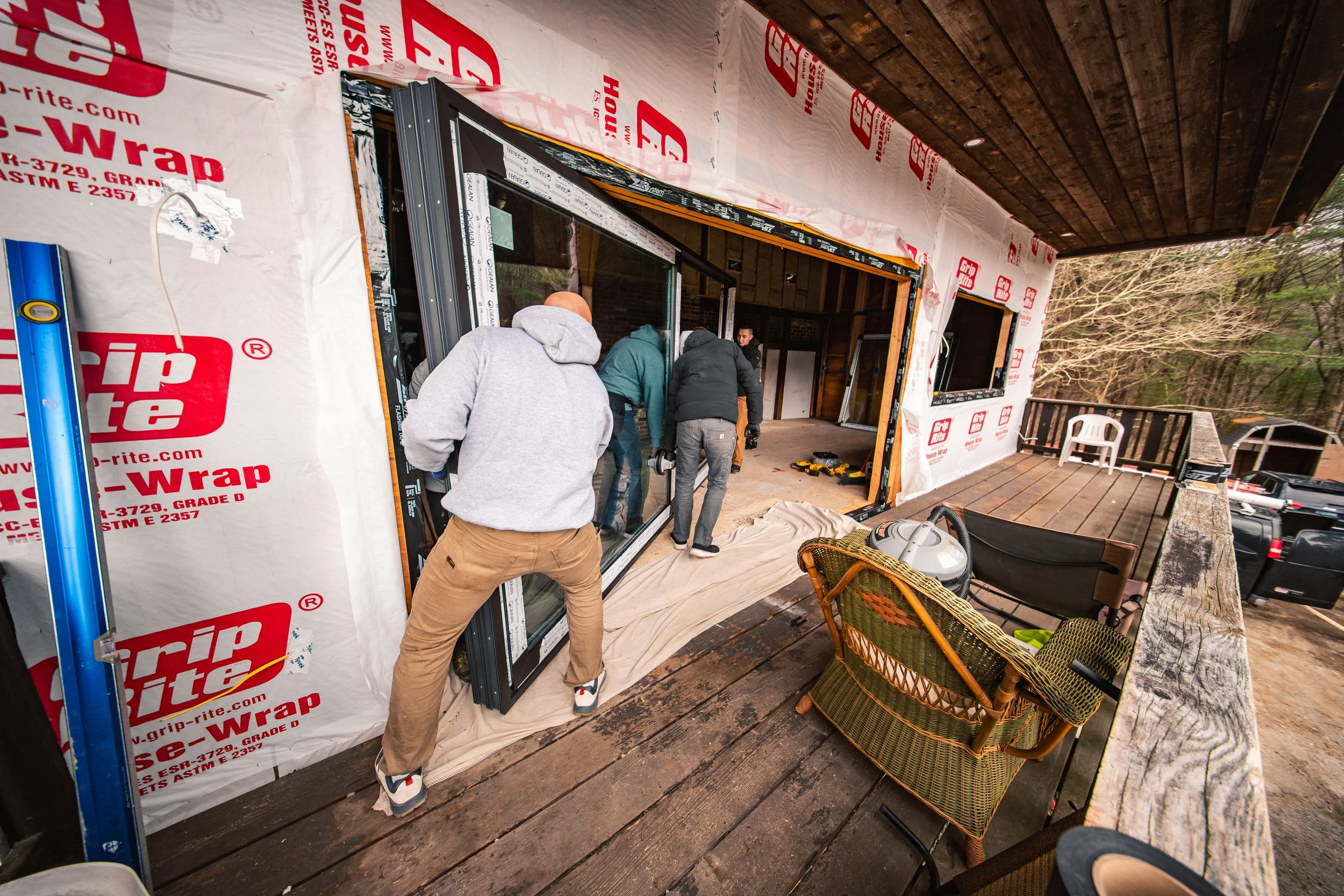
Connecticut is not a mild climate. January wind chills drop well below zero. Summers push into the 90s with high humidity. Nor'easters, ice storms, and freeze-thaw cycles happen every single year. The door you install has to handle all of that without leaking air, warping, or becoming hard to operate.
Standard sliding glass doors struggle here. The bottom track collects debris and freezes. The rubber seals compress over time and stop sealing properly. Basic double-pane glass does very little for heating costs in a real Connecticut winter.
GALAA builds their door systems specifically for this climate — dual-gasket sealing, steel-reinforced GEALAN frames, and thermally broken profiles engineered to perform consistently across extreme temperature swings. The same door that glides smoothly in July performs the same way in February.
Connecticut's energy codes are also tightening. The state has been moving toward higher performance requirements for new construction and major renovations, and that trend is accelerating across the Northeast. GALAA manufactures to exceed current Connecticut code requirements, so homeowners who install their systems now are not buying something they'll need to replace when standards change.
Space and Layout: Which Door Fits Your Home
If you have a smaller room, a tight exit to a deck, or a layout where floor clearance is limited, a sliding door is the practical call. Nothing swings inward or outward, so you keep your full floor area and furniture placement stays flexible.
If you have the space and want a traditional or architectural look, hinged patio doors deliver something a sliding door can't match. A pair of French-style doors on a colonial or farmhouse in Litchfield County or along the Connecticut shoreline fits the architecture in a way a horizontal slider won't.
Modern builds and contemporary renovations tend to suit sliding door systems very well. The slim profiles, large glass panels, and clean lines create a visual connection between indoors and outdoors that's increasingly common in new construction across Connecticut.
Energy Efficiency: Where the Gap Is Largest
This is where product quality makes the biggest real-world difference.
A standard sliding glass door from a big box store typically carries a U-value between 0.30 and 0.50. The U-value measures heat transfer through the door assembly — lower is better. At 0.50, you're losing a meaningful amount of heat through that door every Connecticut winter.
GALAA's sliding doors reach 0.18 at the low end. Their patio door systems go as low as 0.15. That means GALAA systems lose roughly two to three times less heat than a typical standard product. Over a full Connecticut winter, that difference shows up clearly in your energy bills.
The technology behind these numbers is triple-glazed glass from Cardinal Glass Industries combined with GEALAN multi-chamber PVC frames. The frame itself acts as a thermal barrier, not just the glass. That combination is what separates European-engineered door systems from what most American homeowners have grown up with.
If you're replacing sliding doors on a Connecticut home built before 2000, energy performance alone is often enough to justify the upgrade.
Security: What Actually Protects Your Home
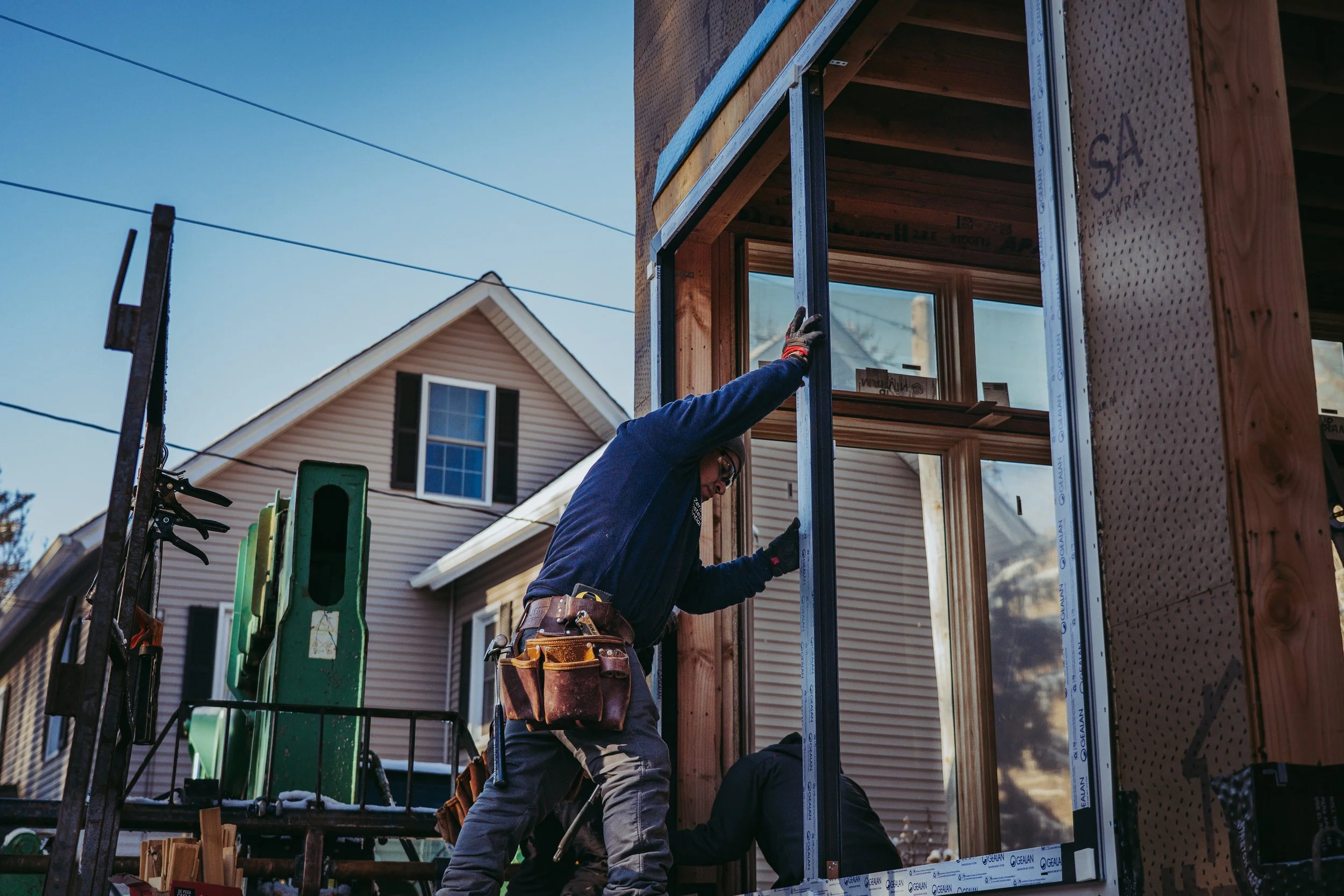
Standard sliding glass doors have a well-documented weakness. Many can be lifted out of their tracks with basic tools, and the single-point latch most come with is not a serious security measure.
Both GALAA's ProSlide and patio door systems use multi-point locking hardware from WINKHAUS, a German manufacturer with a track record in high-security applications. When you lock the door, it engages at multiple points along the frame simultaneously — not just at one center latch. That fundamentally changes how much force is required to force entry.
The RC2 rating these systems carry is an international burglary resistance standard. It requires the door to withstand a sustained attack with common break-in tools for at least three minutes. Standard sliding glass doors don't come close to that threshold.
Cost: How to Think About the Investment
Standard sliding glass doors start in the $500 to $1,500 range for the product itself, with installation on top. They're accessible and widely available.
GALAA's ProSlide and patio door systems represent a higher upfront investment. That's accurate. But the comparison that makes sense here is the same one you'd make with a high-efficiency furnace versus a basic one. The higher-performing product costs more upfront and pays back through lower energy costs, less maintenance, and longer product life.
Because GALAA manufactures in Connecticut, you're buying from a local company rather than paying national brand retail markups. That tends to make their pricing more competitive than you'd expect for the performance level involved.
For homeowners planning to stay in their Connecticut home more than five to seven years, the math on a higher-performing door system usually works in their favor.
Which Door System Should You Choose?

Here's how to frame the decision:
Choose a sliding door system if your space is limited, you want a modern minimal look, you're exiting to a deck at the same floor level, and you want smooth everyday operation without a panel swinging into the room. If you're going this route, the GALAA ProSlide is built for Connecticut conditions and performs at a completely different level than what's available at a home improvement store.
Choose a hinged patio door if your home has a traditional or colonial aesthetic, you have room for swing clearance, and you want the look of two panels opening wide. GALAA's patio door systems bring European thermal performance to that classic form factor without sacrificing the look.
If you're replacing old sliding glass doors on an existing Connecticut home, this is often one of the highest-impact upgrades you can make. Older door systems are usually the weakest point in a home's thermal envelope, and the improvement is something most homeowners notice immediately.
Frequently Asked Questions
What is the difference between a sliding door and a patio door?
A sliding door moves horizontally on a track. A patio door typically refers to a hinged French-style door that swings open. Both connect interior living spaces to the outdoors, but they differ in operation, floor space requirements, and the architectural styles they suit best.
Are sliding glass doors energy efficient for Connecticut winters?
Standard sliding glass doors are not particularly energy efficient. GALAA's ProSlide system uses a GEALAN 4-chamber profile frame and triple-glazed Cardinal glass to achieve U-values between 0.18 and 0.30, which is substantially better performance than typical products on the market.
What is the best sliding door for Connecticut weather?
Look for a door with a U-value under 0.25, dual-gasket sealing, and a frame system engineered for freeze-thaw conditions. GALAA's ProSlide system is manufactured locally in Plainville, CT, specifically to handle Northeast climate conditions year-round.
What is the best patio door for Connecticut weather?
You want a door with a U-value under 0.25, a multi-point locking system, and a sealing mechanism that holds up through freeze-thaw cycles. GALAA's patio door systems reach U-values as low as 0.15 and are manufactured locally in Connecticut for Northeast climate performance.
How do GALAA door systems compare to standard products on security?
GALAA's ProSlide and patio door systems both carry up to RC2 burglary resistance through WINKHAUS multi-point locking hardware. Standard sliding doors typically rely on a single-point latch, which is not a serious security barrier. RC2 requires a door to resist a sustained attack with common break-in tools for at least three minutes.
Are European-engineered door systems worth the cost for a Connecticut home?
For homeowners planning to stay more than five to seven years, generally yes. Energy savings, reduced maintenance, and longer product lifespan offset the higher upfront cost. The improvement in day-to-day comfort and operation is something most homeowners notice immediately.
How do I choose between sliding doors and French patio doors?
Start with your available space. If floor clearance is tight, a sliding system is the practical choice. If you have room and want a traditional aesthetic, French-style patio doors are a strong fit. For modern homes with large openings, a precision sliding system like GALAA's ProSlide tends to deliver the best combination of visual impact and thermal performance for Connecticut conditions.
The Bottom Line
The sliding doors vs. patio doors question doesn't have one right answer for every home. But it does have a right answer for yours, and it comes down to your available space, your home's style, how long you're staying, and how seriously you take energy performance in a Connecticut winter.
What's changed is the product landscape. You're no longer choosing between a basic slider and a standard French door. European-engineered door systems, built locally by manufacturers like GALAA Windows and Doors in Plainville, have brought a completely different level of performance within reach for Connecticut homeowners.
If you're replacing old doors or planning new construction, it's worth having a conversation with someone who knows the products before you commit. A door decision affects your home's comfort, energy bills, and security every single day.
Reach GALAA Windows and Doors at (860) 515-7203 or visit galaawindows.com to explore their door systems and schedule a consultation.
